

Đờn kìm
Also called the moon lute, after its round body. Two strings, a long neck and tall frets for deep bends. A firm, warm tone. It usually leads the ensemble, and its player often keeps the song lang as well.
The đờn ca tài tử repertoire
Twenty pieces form the foundation of a whole musical tradition. Every player starts here.
6 Bắc
spring
7 Hạ
summer
3 Nam
autumn
4 Oán
winter
Đờn ca tài tử took shape in Southern Vietnam in the late 19th century, as ceremonial music, court music and folk song travelled south with the settlers. Players and singers sat together at home and played for kindred spirits, not for a stage.
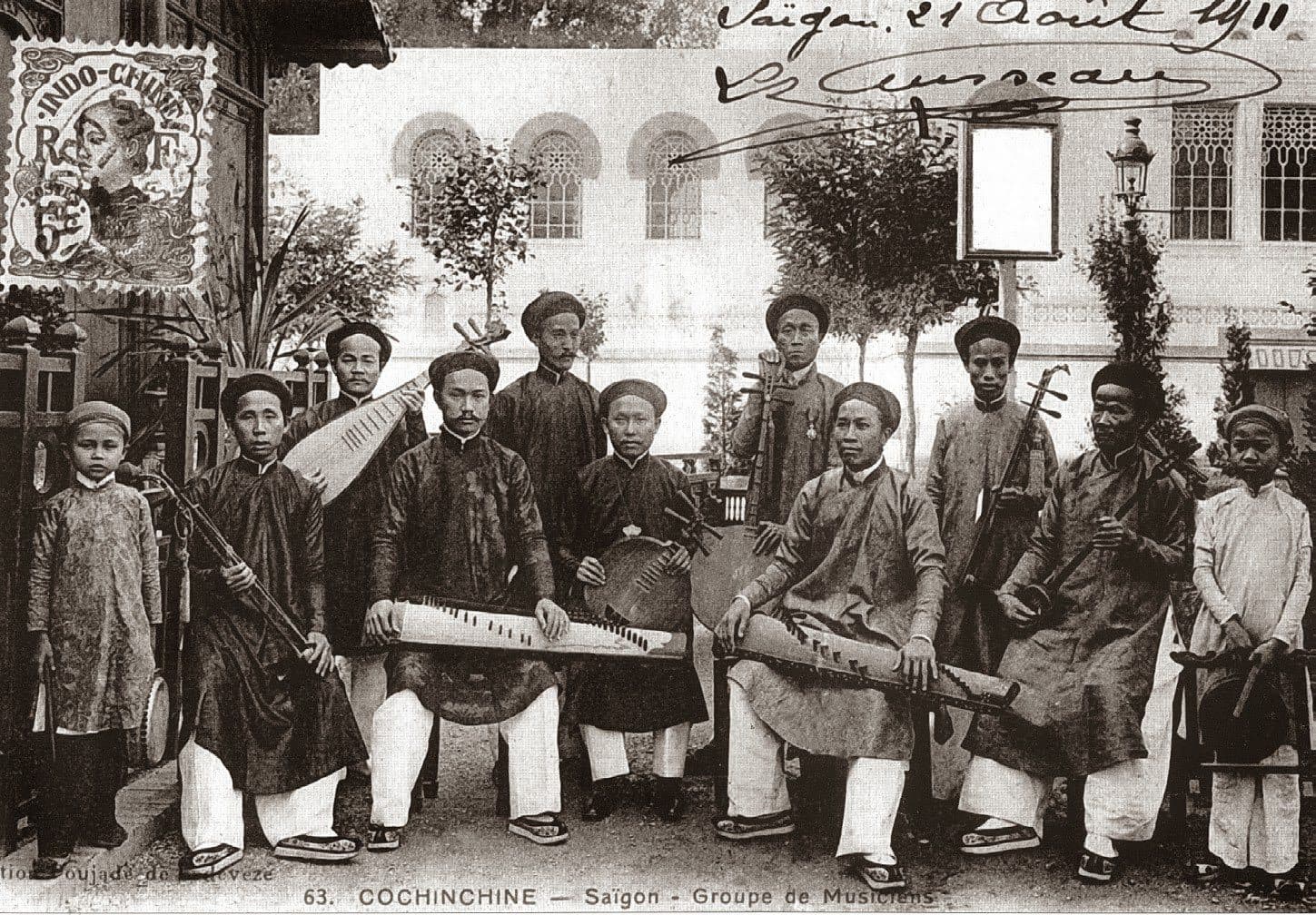
Scholars, the late Professor Trần Văn Khê among them, place the birth of đờn ca tài tử in Southern Vietnam at the end of the 19th century and the start of the 20th. It drew on several sources: ceremonial music, the court music and chamber songs of Huế, and the work songs and folk tunes of the river country. Tradition has it that court musicians who came south with the Cần Vương resistance movement carried that repertoire with them. The name heard most often is Nguyễn Quang Đại, known as Master Ba Đợi, who settled and taught in Long An.
In its new home the music shed its ritual formality. People spread a mat indoors, on the veranda or under a tree and played for one another after the day's work. No stage, no backdrop, no tickets; listeners sat right beside the players and were often players themselves. UNESCO describes it as an art with both scholarly and folk roots, bound up with life on the land and rivers of the South, and heard at festivals, death-anniversary gatherings and celebrations.
The music also travelled early. According to French records cited by the researchers Nguyễn Đức Hiệp and Nguyễn Lê Tuyên, tài tử music was performed at the Paris world's fair of 1889, and many accounts mention Nguyễn Tống Triều's ensemble at the colonial exhibition in Marseille in 1906. Out of those first steps onto a stage came ca ra bộ, singing with gestures, which grew into cải lương theatre.
What a mode is. A mode, called hơi or điệu, is the emotional colour of a piece. Tài tử music uses a five-note scale: hò, xự, xang, xê, cống. Keep the same five notes but change how they are pressed, shaken and slid into, and the mode changes, turning a piece from joyful to sorrowful. According to UNESCO, a player needs at least three years to learn the basic techniques and master the modes.
So learning a piece is more than memorising its notes. The student listens to the teacher phrase by phrase and copies until the mode comes out right: which note is shaken, which is pressed, which is left to ring. UNESCO calls this oral transmission, based on imitation, from master to student. The twenty ancestral pieces, grouped by mode, are the familiar road every learner walks: get through all twenty and you have met every main mode of tài tử music.
Tradition credits the master Nhạc Khị of Bạc Liêu with arranging the twenty pieces into four groups, which players liken to the four seasons. Pick a season to explore.
Cheerful, bright, nimble
Bắc is the mode of joy. The melody moves cleanly across the five notes hò, xự, xang, xê, cống, with a lively pulse and bright, decisive phrases. The six Bắc pieces suit reunions, meetings and moments of ease.
The titles already set the scene: Lưu Thủy means flowing water, Xuân Tình the feeling of spring. In the four-seasons picture the six Bắc pieces are spring, when everything is fresh. Listen to one and you will hear phrases that move straight ahead, seldom lingering on a note to shake or bend it, which is why newcomers tend to find Bắc easy on the ear.
Press play next to a title to hear the first 45 seconds of its main section, taken from the instrumental recordings in the DC2T archive.
Create a piece in the Bắc modeA tài tử ensemble is small enough to fit on one mat. The classic line-up has the đờn kìm, đờn tranh, đờn cò, tỳ bà and đờn tam; later came the đờn bầu, the flute, and Western instruments reworked to suit the music, such as the scalloped guitar and the violin. The song lang clapper keeps time for everyone.
There is no conductor. Each instrument takes its own path over the same melodic frame, now weaving together, now giving way, and a seasoned listener can tell the players apart by their touch. The ensemble grows or shrinks with the occasion: sometimes it is just two or three instruments and one voice.
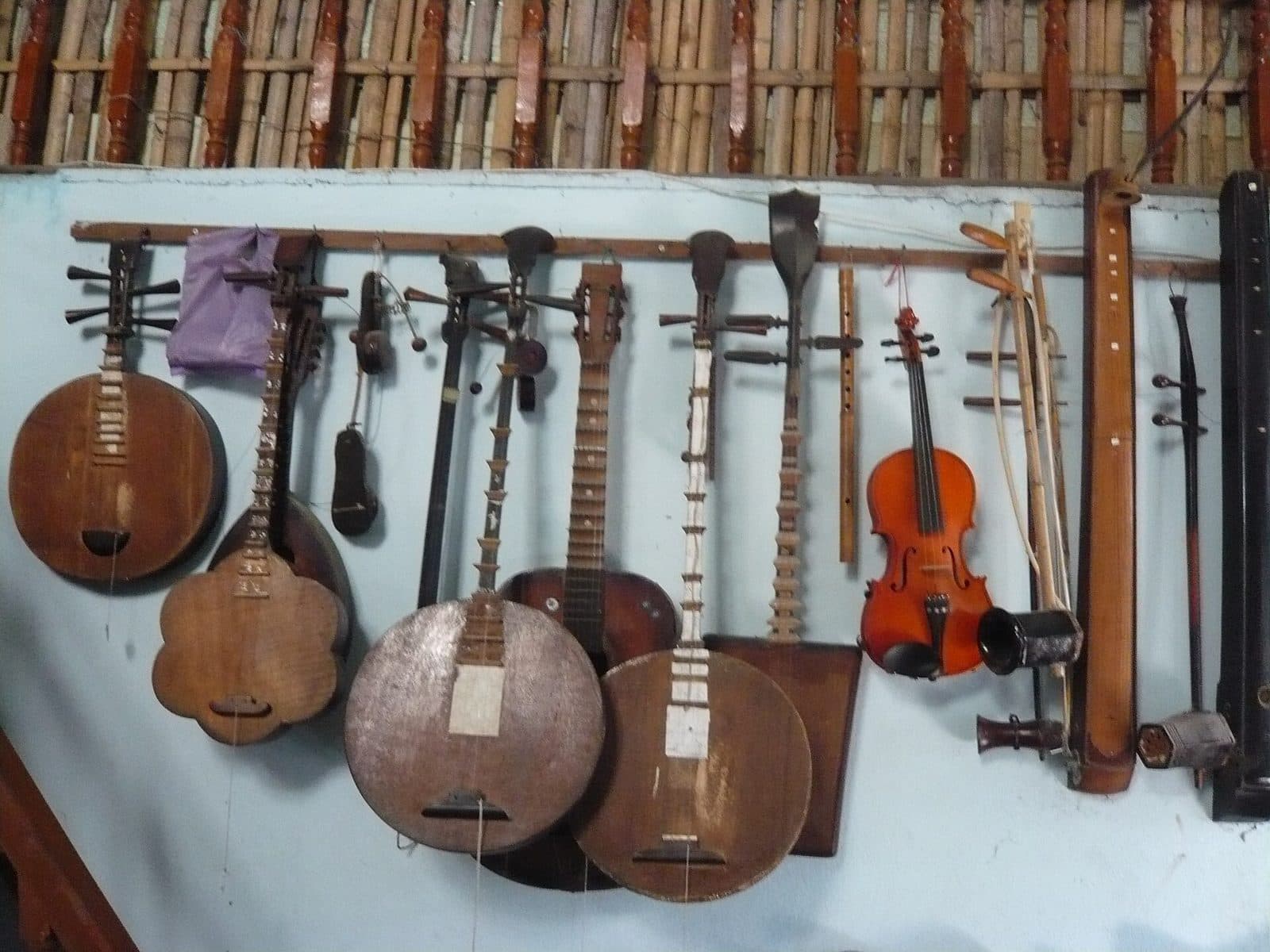
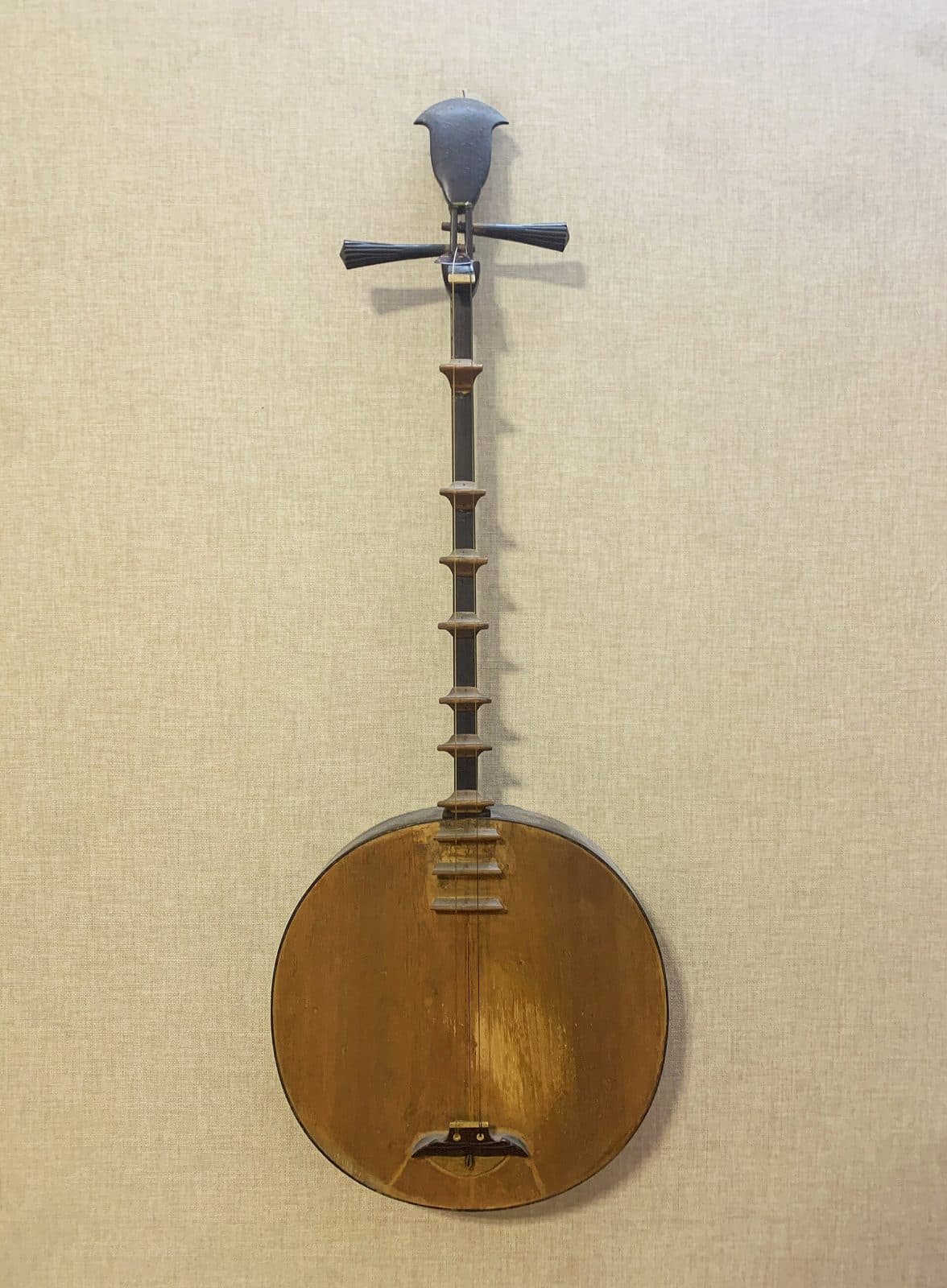
Also called the moon lute, after its round body. Two strings, a long neck and tall frets for deep bends. A firm, warm tone. It usually leads the ensemble, and its player often keeps the song lang as well.
A zither with sixteen strings over a slanting row of movable bridges. The right hand plucks while the left presses and shakes the strings to shape each note. Clear and ringing, like running water. Today there are also seventeen-string and larger versions.
Called đờn nhị in the North. Two strings, no frets, played with a bow threaded between the strings. With no frets in the way, it glides from note to note, keening, the closest sound in the ensemble to the human voice.
Also called lục huyền cầm. A Western guitar with the wood between the frets scooped out, so the fingers can press deep, bend long and shake each note in the tài tử manner. It is the instrument most often heard accompanying vọng cổ.
A transverse bamboo flute. It is not always part of a tài tử ensemble; when it is, it adds a light colour that floats above the strings.
It means a person of talent. Players make music for kindred spirits and for love of the sound, not for a living. But amateur does not mean casual: earning a place on the mat still takes years of practice.
Before a piece, the player improvises a free, unmetered prelude to check the tuning and set the mode. From the rao alone, a seasoned listener can guess which mode is coming.
Every piece has a fixed melodic frame. Each player ornaments it as the moment suggests, so no two performances are alike. UNESCO describes this as improvising, ornamenting and varying the “skeletal melody” of the piece.
A small wooden clapper worked with the foot, with a hard, dry click. It marks the main beats of each phrase so the ensemble stays together while everyone ornaments in their own way.
A player's touch: the way they shake, press, strike and slide on the strings, which is their personal signature. The same piece sounds different in two pairs of hands, and musicians recognise one another by it.
Passing it on by finger and by mouth, the way the music has always been taught: the teacher plays and the student copies; the teacher sings and the student follows. Pieces travel from person to person by ear and hand far more than on paper.
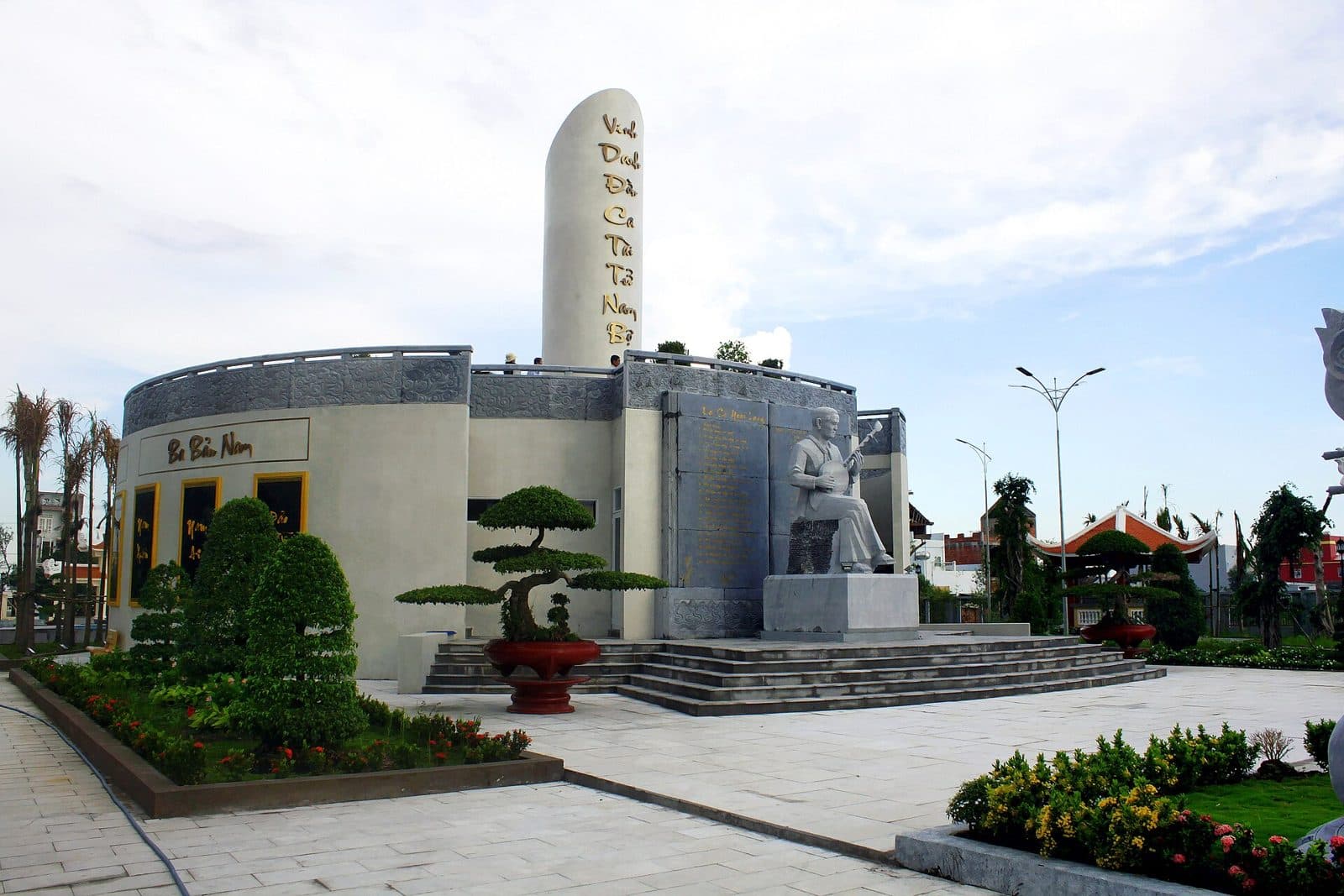
Bạc Liêu is one of the cradles of tài tử music in the Mekong Delta. It was home to the master Lê Tài Khí, known as Nhạc Khị, who founded the Bạc Liêu traditional music ensemble and, according to the researcher Trần Phước Thuận, revised and systematised the twenty ancestral pieces. His student, the composer Cao Văn Lầu, wrote Dạ cổ hoài lang around 1919.
From that twenty-phrase piece, in the hands of generations of musicians, the phrases were stretched longer and longer until it became vọng cổ, the best-known song form of cải lương theatre. Today Bạc Liêu has a memorial to the art of đờn ca tài tử and to Cao Văn Lầu, where the statue in the photograph stands.
Choose Bắc, Hạ, Nam or Oán and let DC2T play you a piece.